
How Local Businesses Can Benefit from Digital Marketing
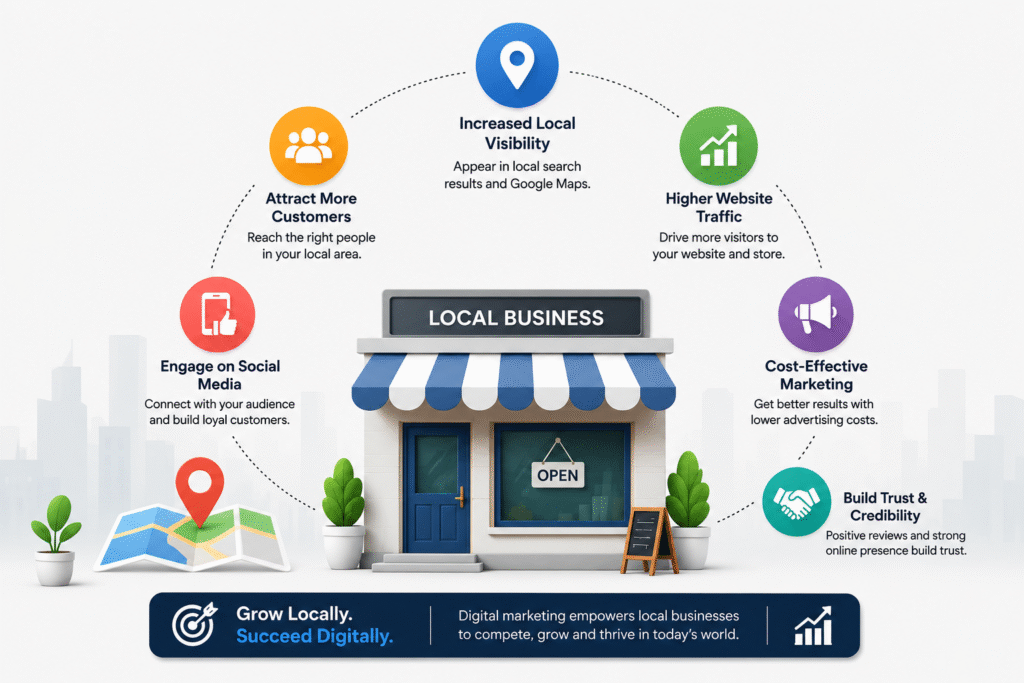
Running a business these days means you have to compete in two different worlds at the same time. The neighborhood where your Local Businesses is located and the online world where most of your customers start looking for things. Word of mouth and local advertising are still important. They are not enough on their own anymore. Customers look up businesses online before they even come to your store and if your business is not visible online, you will lose customers to your competitors who have a presence online. This is where digital marketing can make a difference. At Globuzz Media Agency in Pune, we help local businesses create an online presence that can help them grow. Here is a complete breakdown of how digital marketing can help businesses and how to get started. What Is Digital Marketing? Digital marketing is simply the promotion of your business through digital media such as search engines, social media, emails, and your own website as opposed to just print advertising and word-of-mouth publicity. This type of marketing offers local businesses an effective yet economical platform to contact their customers. Major Benefits for Local Businesses 1. Increased Local Exposure If one searches for “bakery near me” or “Digital marketing services in Pune,” then Google will show those locations that really exist physically. Having a Google business profile makes it more probable that the location of your business will appear when searching for something on Google. 2. Precise targeting You can pick the people you want to sell to with marketing. This means you think about where they live, how old they are, what they like and what they do online. So you can make sure the food from your restaurant gets to the people who live near you. 3. More Affordable than Traditional Marketing Methods It costs a lot of money to put ads on TV and in newspapers. It is hard to know if they are working. With marketing tools like Google AdWords and Meta AdWords, you can decide how much you want to spend and choose exactly who you want to reach. You only pay for the ad if someone actually interacts with it. Digital marketing is a way to get your business seen by the right people without spending too much money. 4. Easy to Measure in Real-Time The effectiveness of your marketing campaign on the Internet can be measured in real time through various metrics that Google Analytics provides to you along with other digital marketing tools. 5. Mobile-First Advantage Most people look for things on their phones, so having a website that works well on devices is important. This way you can reach customers where they’re 6. Builds Brand Awareness and Recognition Visibility on the Internet will create more awareness of your company, allowing customers to become acquainted with your company. It may lead to the creation of a positive reputation and acquiring customers. 7. Reputation Management and Credibility Reviews on the Internet are just like word-of-mouth referrals. People have faith in reviews and reputation management will allow you to increase credibility and acquire more customers. 8. Customer Engagement By using social media, emails, and live chats, you can establish personal communication with your customers and build a connection with them. This will help you make the customers loyal to your brand. 9. Competing With Big Companies An optimized website and proper online marketing strategy allow small companies to compete with big brands. You don’t have to spend a huge amount of money to compete. You have to have the right strategy. 10. Long-Term, Compound Growth Whereas advertisements will provide immediate results, optimizing your website and creating content will ensure that your business experiences long-term compound growth. Ways to Begin – Know what your objective is and your target audience before starting any marketing campaign – Ensure that your website is optimized for search engines and mobile phones – Optimize your Google Business Profile to appear in search results – Create a presence on social media where your customers are – Start with small paid ads and scale up what works – Use email to stay in touch with your customers – Track your results and make changes based on what you learn Most local businesses do a great disservice to themselves by failing to get their basics right. Misdirecting their efforts to the wrong audience, post haphazardly, do not respond to reviews, do not expect immediate results, and fail to monitor their efforts. Why Partner with Globuzz Media Agency in Pune Digital marketing works when it is handled by people who understand the strategy and the day-to-day work. As a trusted marketing agency in Pune, Globuzz Media Agency helps local businesses with things like optimizing their Google Business Profile, making their website better, creating content, managing social media and tracking performance. We know the difficulties faced by local businesses. We develop strategies for them that work. Increased visibility = increased leads and increased customers. It is time for local businesses to recognize the importance of digital marketing. It means the difference between being found and not being found. From getting visibility and saving money on advertising to building stronger relationships with customers and getting long-term growth, the benefits are clear. If you are ready to improve your presence, Globuzz Media Agency, the best SEO agency in Pune, is here to help. Get in touch with us today. See how digital marketing can transform your business.
7 Ways Globuzz Media Agency in Pune Helps Your Business Build a Stronger Brand
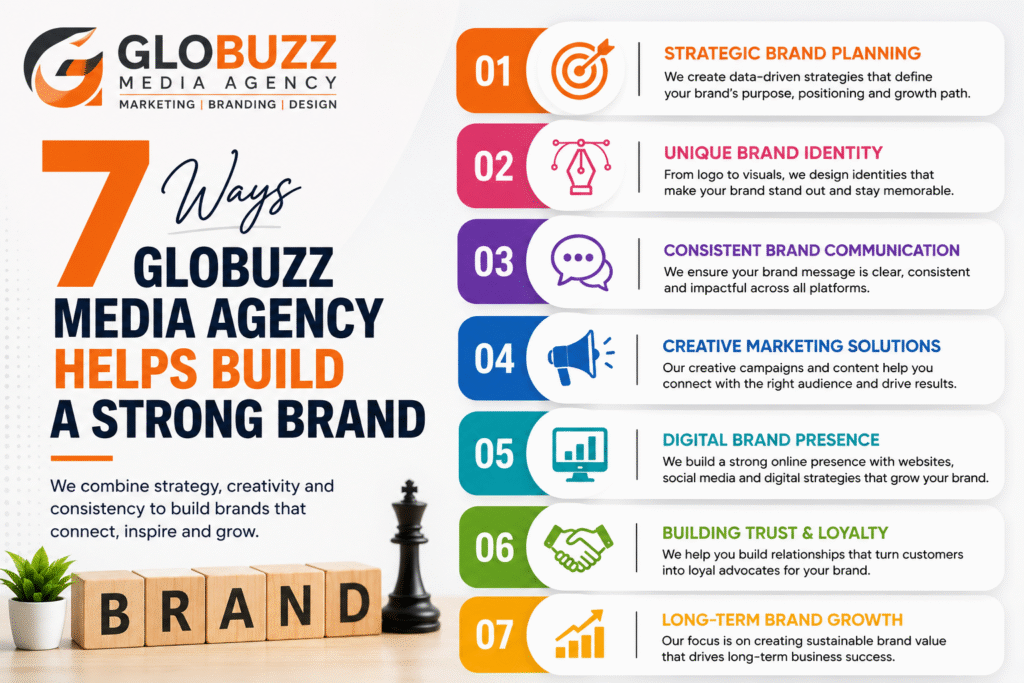
Every business today wants to be seen, trusted and remembered. With so many companies trying to get attention online, just having a website or a logo is not enough. You need a brand people recognize and a strategy that keeps it in front of people online. This is where Globuzz Media Agency comes in. This agency works as a full-service Digital Marketing Agency in India, helping businesses grow through branding, SEO, content and online marketing. Whether you are a local business or a growing company, the right support can make a real difference. Here are 7 simple ways Globuzz Media Agency helps businesses build a brand that lasts. 1. Understanding Your Business First Before you start doing anything, Globuzz Media wants to know about your business. They want to know what kind of things you sell. They also want to know who your customers are. What is it about your business that makes it different from other businesses? This is an important step. If you do not do this, then you are just guessing about how to make your brand look good. As a company that people trust, Globuzz Media is a Branding Agency in India. They think that every business has its special story. The job of this media agency is to find this story and use it to create a brand that people will like and want to connect with. This agency works so that your brand will be memorable and likable. 2. Creating a Clear Brand Identity Once the business goals are clear, the team works on your brand identity. This includes your logo, colors, fonts and overall look. But branding is not about visuals. It is also about how your brand talks and feels to customers. Pune-based Globuzz Media Agency ensures your brand identity remains simple, clear and consistent at all times on websites, media, packaging, and advertising. Consistency in branding builds trust faster than inconsistent branding. 3. Improving Your Online Presence (SEO) What’s the use of a brand name if you can’t be found online? This is precisely where the specialty of Globuzz Media lies. As a Digital Marketing Agency, they ensure businesses rank on Google through keyword analysis, on-page SEO, content writing, and link building. 4. Proper Management of Social Media Social media channels are the place where today’s customers hang out. This Agency helps companies create content that fits their brand voice. Whether it is an Instagram Reel or a LinkedIn Post, everything created is done with your brand in mind. 5. Running Smart Digital Ad Campaigns Organic growth is not enough. Especially for new businesses or product launches. We also manage paid advertising campaigns on Google and media platforms. These campaigns are planned carefully based on your budget and business goals so that you get results instead of wasted ad spend. 6. Creating Content That Connects Content marketing is one of the ways to help you build your brand identity and show what sets you apart from other brands. The content marketing approach used by Globuzz Media is based on the idea of creating content that’s clear, concise and free of complicated words. 7. Measuring Performance and Continuous Improvement Branding and marketing are not one-time projects for us. They continuously monitor the performance of your website, advertisements, and content and then adjust everything according to the metrics. That is what sets Globuzz Media Agency apart from other marketing agencies. Why Businesses Choose Globuzz Media Agency in Pune Pune is gradually becoming home to a lot of startup businesses, IT firms, and local businesses. Given the competitiveness in such an environment, selecting the appropriate partner becomes very important. Globuzz Media is an interesting option because it offers the perfect blend of a Branding Agency in India and a Digital Marketing Agency in India. This means that you do not have to go to several different companies for branding, SEO services, social media and advertising campaigns. This makes sure that the company has an understanding of your brand and works for your growth in one direction. Creating a brand does take time, but with the right partner, things definitely become easier. Globuzz Media Agency in Pune is just the right agency when it comes to creating and growing a brand.
How Digital Marketing Helps Local Businesses in Pune
Pune has gradually grown into one of the busiest business cities, with IT parks in Hinjewadi and cafes, clinics, and boutiques across neighborhoods such as Kothrud and Baner. Competition among firms is becoming fierce and as such, digital marketing has emerged as the only way for companies to remain visible and gain more visibility. From a neighborhood bakery serving weekend orders to a growing company targeting its first hundred clients, digital marketing allows Pune’s firms to communicate directly to those searching for their products and services. Why Local Businesses in Pune Should Go Digital Today’s consumers do not stroll around looking for a store like in the good old days. Instead, they turn to Google to search for what they want by typing ‘near me’. If the product or service that a consumer searches for does not show in search results, then the firm offering such services or products does not even exist to that individual. That is precisely the reason why digital marketing has taken priority for all small and mid-sized businesses in the city of Pune. Local Search Visibility and Google Business Profile One of the easiest yet most effective ways for Pune companies to get their way through the online clutter is through a Google Business Profile. With everything right from the operating hours, photos, and testimonials in order, such a profile goes a long way in enabling a company to come up in the local map pack when someone searches for something as specific as “best salon in Kothrud” or “digital marketing agency in Pune”. Being at the top of the search results for local SEO forms an essential part of a strong digital marketing campaign. Building Trust Through Content and Social Media For any local business, trust is everything, and content is the quickest way to do that. From blog articles to behind-the-scenes clips on Instagram or genuine reviews on their Facebook page, a customer knows right away that a business is legitimate even before stepping into it. In other words, a well-planned digital marketing campaign takes all of these into consideration so that the customer’s experience from their first encounter with a brand on Instagram to their final booking is consistent and trustworthy at every single stage. Affordable Marketing Solutions Compared to Traditional Marketing Techniques The traditional marketing technique involves a high level of uncertainty since one never knows whether the expenditure made in form of newspaper inserts or even hoardings placed around roads such as FC Road was worth it. However, with digital marketing channels such as Google Ads and Meta Ads, a business has total control over how much budget to allocate each day, and they can focus their efforts on a particular locality in Pune and measure the exact number of clicks and calls. Reaching the Right Audience at the Right Time Pune comprises many heterogeneous neighborhoods, from the neighborhood around Deccan, which caters to the young student population to Baner and Wakad, which house the young professionals. Any general message will not resonate with them. It allows the company to use online methods to identify segments on the basis of demographics, interests and geography so that a club could target the students living in their vicinity while the design studio targets the higher-income localities. That is why SEO and social media marketing go hand-in-hand with each other. Why It Makes Sense To Work With a Digital Marketing Company Managing SEO, social media marketing, paid advertising, and content marketing altogether requires skills and time that most business owners do not possess due to the other aspects of their businesses that require more attention. That is why working with a digital marketing company becomes relevant. One such company is Globuzz Media Agency in Pune that helps businesses gain search presence, run paid campaigns, and develop localized content. Instead of using one-size-fits-all approaches, agencies like this develop an approach based on a particular neighborhood, industry, and audience of a particular company. It is usually the factor that determines whether your marketing campaign will be successful and generate ongoing enquiries or not. What Digital Marketing Services Entail It always pays off to know what to expect when you hire someone. Good digital marketing services include SEO optimization of the website and Google Business profile, social media management, pay-per-click campaigns, auditing your site for any ranking problems, and providing reports on your campaign performance. When all these components are integrated into a single approach, results will usually multiply over several months, instead of disappearing after one campaign. The question that local companies in Pune should ask themselves is not whether they should use digital marketing for promotion and development but how wisely they will do it. From the presence in local search results to running affordable advertisement campaigns and establishing brand reputation via content marketing, digital marketing opens a great chance for local businesses to compete successfully with larger brands. In this context, collaboration with a professional digital marketing agency in Pune like Globuzz Media Agency can be beneficial.
Grow Your Small Business Faster
15 Proven Ways to Grow Your Small Business Faster in 2026 For the successful Grow Your Small Business Faster in the modern business environment, more than ever, there should be not only the best product but also the right approach to promotion. By collaborating with a Digital Marketing Agency in Pune, businesses can develop their online presence, generate high-quality leads, and drive revenue. For both start-ups and established businesses, it is possible to employ the following tested approaches to get sustainable growth in 2026. 1. Grow Your Business with a Digital Marketing Agency in Pune The professional Digital Marketing Agency in Pune will be able to target your potential customers through SEO, social media, paid advertising, and content marketing. Rather than guessing about your prospects, experts will apply tried-and-tested strategies to ensure real business growth. 2. Create a Successful Brand To make your business really well known you need to create a brand that people can easily recognize and trust. You should use pictures, clear messages and always say the same thing on all platforms. A Branding Agency can help you make a plan for your brand, including your logo, design and how you treat your customers. This will help your business stand out from other companies and be strong in the market. There is no such thing as a simple brand. It is a unique business identity of a company. For creating a unique and recognizable brand, one may collaborate with a professional Branding Agency in Pune. 3. Build a Professional and Mobile-Friendly Website The website is usually the first interaction that customers have with your business. Having a fast-loading, responsive, and easy-to-navigate website is important. You need a website to be seen online and attract new customers. Your website should be fast work well on phones easy to use and good for search engines. A made website makes people happy makes your business look good helps get new customers and makes it easy for people to understand what you sell. 4. Improve Your Google Rankings with SEO When people search online, you want your business to show up. This is where Search Engine Optimization comes in. A good Digital Marketing Agency in Pune can help your website by using the keywords, making some technical changes and adding good content. This way, more people will visit your website naturally. 5. Grow Through Social Media Marketing You can reach your customers on Facebook, Instagram, LinkedIn and YouTube. If you post things regularly people will know more about your business, you will get new customers and your current customers will like you even more. 6. Use Email Marketing to Nurture Customers Email marketing is a way to turn people who are interested in your business into loyal customers. You can send them newsletters that’re just for them, with special offers and reminders. This way, people will come back to your business again and again. 7. Run Converting Google Ads Campaigns Google Ads helps your business reach people who are looking for what you sell. If you use the words make your ads look good and have a good landing page you can get good leads and sell more. You should always. Improve your ads to save money and get a good return on what you spend. 8. Automate Marketing, with AI-Powered Tools There are tools that use intelligence to help your business do things automatically like sending emails helping customers planning content and managing leads. This saves you time makes you more productive. Helps you treat your customers really well. Using intelligence means your team can focus on big ideas, new things and things that help your business grow in the long term. 9. Publish Valuable Content I think creating blogs, videos, case studies and helpful guides is a way to show people that your business is an expert in the industry. When you have content, it does a few things. It gets people to visit your website, it helps with search engine optimization and it makes customers trust your business over time. 10. Deliver a Customer Experience When you have great customer service, people who buy from you will tell their friends about your business. So you should try to answer questions, solve problems fast and always do a little more than people expect. 11. Track Business Performance with Analytics In my opinion, effective organizations should always base their decision-making on the truth rather than speculation. In order to achieve this, you will have to look at different statistics such as the number of people visiting your website and how successful your marketing campaign was in attracting them. 12. Build Customer Loyalty Getting new customers is important but keeping the ones you already have is more important. When you have loyalty programs and you talk to customers in a way and you help them after they buy something, they will come back and buy from you again. 13. Expand Your Products and Services Strategically If you understand what your customers need, you can create products or services that will make you more money and make your business stronger. 14. Build Strategic Business Partnerships When you work with businesses that do things that are related to what you do, you can reach more people, become more credible and get new customers. Good partnerships help both businesses grow. 15. Continuously Innovate Things are always changing. What people want, what technology can do and what is happening in the market. Businesses that try things, use new tools and change their plans are more likely to stay competitive. Why Choose Globuzz Media Agency in Pune? At Globuzz Media Agency in Pune, we help businesses grow with marketing solutions that are designed to get results. As a Digital Marketing Agency in Pune, we are good at search engine optimization, Google Ads, media marketing, branding, website development and performance marketing. We help businesses get leads and grow in a way that will last. If you want to be seen online, make your brand stronger or
Grow Your Business with the Best Digital Marketing Agency in Pune
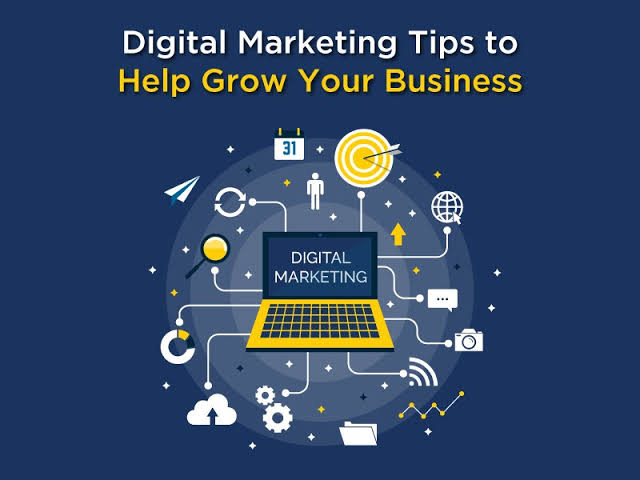
A product or service is the very basis of every successful company, but nowadays, it is not sufficient for customer attraction and retention. Prior to any purchase, people usually search on the Internet, compare brands, check customer reviews, and analyze their options. Those companies that have an impressive digital footprint can be trusted by their customers and grow sustainably. They search on Google, look at brands, read what other people think and check out websites before they decide to buy something. This means that digital marketing is really important for all businesses, no matter how big or small they are. If you want to do you should find the Best Digital Marketing Agency in Pune. They can help you make a website and get the right people to look at it. They can also help you make a plan to market your business online and grow over time. Digital marketing is not about putting your business on the internet. It is a way to make people know about your business, get the right people to look at it, and turn them into customers who will keep coming. It is different from the way of marketing because you can see how well it is working and make changes to make it better. You can look at the numbers. See what people are doing and then you can make a new plan based on that. What is the Benefit of Digital Marketing? One of the advantages of digital marketing is that it lets businesses connect with customers who are actually looking for the products or services that these businesses offer. This means businesses do not have to wait for people to find them. Digital marketing helps businesses show up where people are already looking. On search engines, social media and other places online. Digital marketing also gives businesses control over the money they spend on marketing. They can see how many people visit their website, how people interact with their business and how many people buy something. This makes it easier for businesses to figure out what is working and what needs to be improved. By looking at the numbers, businesses can make decisions and get more out of their marketing efforts. Another good thing about marketing is that it helps businesses seem more credible. When a business has a website with useful information and shows up high in search results, people are more likely to trust it. Businesses that always show up in search results seem more reliable than others that do not have much of an online presence. How Digital Marketing Helps Grow Your Business Business growth is about reaching the right people at the right time with the right message. Digital marketing makes this possible by creating campaigns that are targeted at people who’re actually interested in what you have to offer. These campaigns are based on what customers are looking for, how they search for things, what kind of people they are and what they want to buy. Working with the Best Digital Marketing Agency in Pune means that everything they do to help you market your business is done to help you reach your business goals. The people who work there do not use the old strategies that everyone else uses. Instead, they make plans that are just for your business and they focus on helping your digital marketing grow in a way that is good for the long term and that you can measure. They help your business grow with marketing and they make sure that digital marketing is working for you. Build a Strong Brand Identity with Globuzz Media A strong brand is one of the most valuable assets for any business. Globuzz Media is a Branding Agency in Pune, helping businesses create a unique brand identity that connects with their target audience and leaves a lasting impression. Our branding services include logo design, brand strategy, visual identity, marketing creatives, packaging design, and digital branding to ensure consistency across every customer touchpoint. With a creative and strategic approach, Globuzz Media helps businesses improve brand recognition, build customer trust, and establish a strong market presence. Whether you are launching a new business or refreshing an existing brand, our customized branding solutions are designed to support long-term business growth and strengthen your competitive advantage. How Digital Marketing Improves Your Business Performance Digital marketing helps with all of these things by helping businesses understand their customers better. By looking at how your website’s doing and how it is performing, you can learn a lot about what your customers like to do what products or services they like to buy, where they come from and what makes them buy things from you. This helps you make decisions about how to market your business and how to run it. Globuzz Media Agency in Pune helps businesses with things like making their website show up on search engines and creating content that people want to read. They also help with making websites better and creating a brand that people know online. The people at Globuzz Media Agency in Pune work with businesses to come up with plans that really work and help them grow in a way that is good for the long term.
Digital Marketing Agency in Pune for Business Growth | Globuzz Media
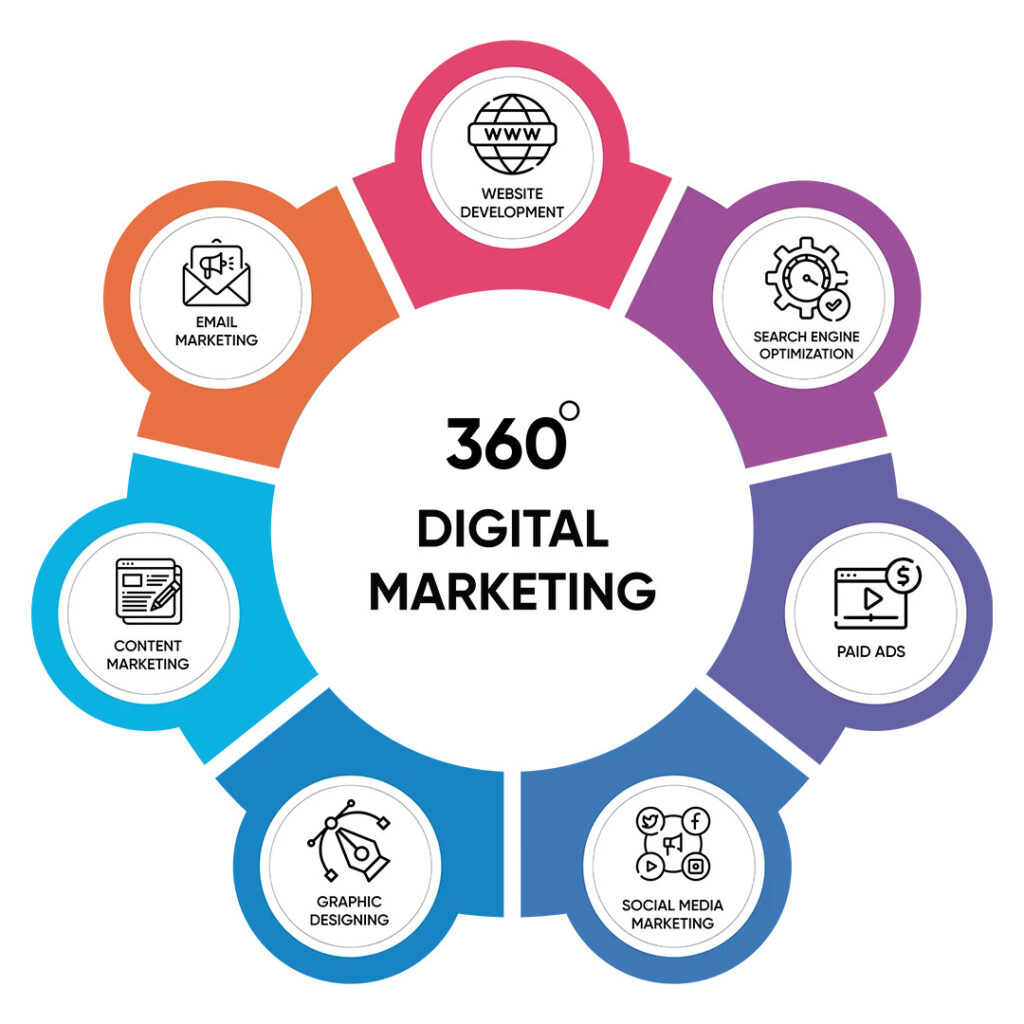
Every business owner wants to get customers good quality leads and a brand that people can really trust. The way people choose a business has changed a lot. Now before people contact any company they do a lot of research online. They compare businesses read what other people have to say about them visit their websites and check out their social media profiles. In a few minutes they make up their mind about which business they trust the most. A professional Digital Marketing Agency in Pune can help improve your presence help you reach the right people and turn people who are interested in your business, into loyal customers of your business. Among the agencies that help businesses succeed, Globuzz Media Agency in Pune has become well-known for making customized digital marketing plans that focus on what really matters to the business rather than just getting quick results. When it comes to making plans for businesses, the agency does not use the same plan for every business. They make plans that fit each client’s industry, the people they are trying to reach and what they want to achieve in the long term. Why Digital Marketing Matters More Than Ever These days, the internet is where people go when they need something. For example, if someone is looking for a place to eat a company that makes things, a doctor or a marketing agency, they usually start by searching on Google. A Digital Marketing Agency in Pune can help businesses like yours get found online. A professional Digital Marketing Agency in Pune helps businesses become visible throughout this customer journey. Rather than simply increasing website visitors, the goal is to attract people who are genuinely interested in your products or services and convert them into long-term customers. Many businesses believe digital marketing is only about posting on social media or running paid advertisements. It is about understanding how customers behave, improving how your website works, creating content, making your website show up in search engines, building trust in your brand and always checking and improving your ads based on real information. Branding Helps Build Trust Before Customers Talk to You One reason customers pick one business over another is trust. People like businesses that look professional, reliable and consistent everywhere. Branding is not about making a logo. It is how customers feel when they interact with your business. From your website and social media to emails and ads, every touchpoint affects your brand. When your branding is consistent, customers feel confident they are dealing with a business. This confidence can help them decide to buy from you before you even talk to them. As a Globuzz Media Agency in Pune we focus on building brands that help businesses stand out and build lasting relationships with customers. A Strategy Designed Around Your Business Every business has goals, challenges and customers. A marketing strategy that produces results for one company may not be effective for another. This is why customized planning has become increasingly important. Rather than offering identical marketing packages to every client, Globuzz Media Agency in Pune begins by understanding the business, its industry, competitors, customer expectations and future growth plans. This research helps develop marketing campaigns that align with business objectives instead of relying on assumptions. Whether a business wants to increase enquiries in Pune or expand its customer base across India, having a strategy built around specific goals significantly improves the chances of long-term success. Creating Long-Term Business Growth Through SEO Search Engine Optimization continues to be one of the valuable digital marketing investments because it generates consistent visibility without depending entirely on paid advertising. When customers search for products or services, businesses appearing on the page of Google naturally receive more attention and enquiries. However, achieving these rankings requires more than adding keywords to a website. Effective SEO is about making your website better. This includes improving its structure, making content better and making it easy for users to navigate. It also means making your website fast and creating information that customers will really use.A good SEO plan does not just get you rankings. It also makes your business look more trustworthy. This is because people often trust businesses that show up at the top of search results. Your Long-Term Growth Partner Choosing a marketing agency is not about giving someone else things to do. It is about finding a partner that really gets your business and can change when the market changes and always works towards what you want to achieve in the run. More and more companies compete with each other; businesses need more than just marketing campaigns. They need a plan, they need to do things and they need to keep making things better to stay visible and competitive. This is where Globuzz Media Agency in Pune is different. They put together a bunch of things like branding, SEO, content marketing, social media management, paid advertising and performance analysis to help businesses build a presence online that really works and can be measured. Working with a Digital Marketing Agency helps businesses make their online presence stronger, attract customers and keep growing in a way that lasts. With an approach, industry expertise and a focus on measurable results, Globuzz Media Agency helps businesses move beyond simply being present online to becoming the preferred choice for customers across Pune and throughout India.
How Long Does SEO Take to Show Results in India?
This is the question every business owner asks before investing in SEO and it’s also the question that every SEO agency answers differently, often conveniently. The honest answer is: it depends. But what it depends on is very specific, and understanding those factors will help you set realistic expectations, avoid being misled, and make smarter decisions about your digital marketing investment. This guide breaks down the SEO timeline realistically with specific context for Indian markets, where the digital landscape has its own characteristics. Why SEO Takes Time Search engine optimisation isn’t an on-off switch. It’s closer to planting a tree. You do the right things choose the right spot, plant the right seed, water consistently and over time you get results that compound and last. But you can’t rush the growth. Here’s what’s happening behind the scenes when you start SEO: Google needs to discover, crawl, and index your new or updated content Your site’s authority needs to be established through quality backlinks Search algorithms need to observe user behaviour on your content over time Your competitors’ existing rankings need to be gradually displaced through consistent, superior content None of this happens overnight. And in India’s increasingly competitive digital landscape where more businesses are investing in SEO than ever before the process takes deliberate, sustained effort. The Realistic SEO Timeline Month 1–2 Foundation and Technical Fixes Technical audit, site speed optimisation, mobile-first fixes, keyword research, competitor analysis, and on-page optimisation. No visible ranking results yet but this work is critical. Skipping this phase is like building on sand. Month 2–3 Indexation and Early Signals Google begins to index your new or refreshed content. You may see movement on low-competition, long-tail keywords especially local and hyperlocal queries. This is where Pune-specific searches like “branding agency in Aundh” or “packaging design Pune” can start to show early movement. Month 3–6 Rankings Begin to Move This is when meaningful progress typically becomes visible. Blog content starts ranking. Local pack (Google Maps) visibility improves. Organic traffic begins to climb. For most Indian businesses targeting city or state-level queries, this is when the investment starts to feel real. Month 6–12 Compounding Growth This is the inflection point. Sites with consistent SEO work see traffic compound older content ranks higher, new content ranks faster, and domain authority improves. Lead quality typically improves as well, because organic traffic isintent-driven. Month 12+ Market Leadership Businesses that have stayed consistent for 12+ months often find themselves ranking on the first page for multiple high-value keywords, generating consistent inbound leads with a much lower cost per acquisition than paid channels. Factors That Determine Your SEO Timeline in India 1. Your Website’s Starting Point A brand new website with no domain history will take longer to rank than a 5-year-old site with existing backlinks. If your site is new, expect the first six months to be primarily foundationbuilding. If you have an existing site with good technical health and some authority, you might see meaningful movement in 3-4 months. 2. The Competitiveness of Your Keywords Targeting “best digital marketing agency in India” is vastly more competitive than “branding agency in Wakad, Pune.” The more specific and localised your target keywords, the faster you can rank for them and often, the higher the conversion rate from those rankings. This is why smart SEO in India often starts with a hyperlocal, long-tail strategy before targeting broader national keywords. It delivers faster results and builds authority that helps you eventually compete for bigger terms. 3. Content Quality and Publishing Frequency Google’s algorithms in 2026 are sophisticated they assess expertise, authoritativeness, and trustworthiness (what Google calls E-E-A-T) with increasing precision. Thin, generic content ranks poorly. Detailed, insightful, well-structured content that genuinely helps your target reader is what performs. Publishing frequency matters too. Sites that publish quality content consistently even once or twice a month build authority faster than those that publish in bursts and then go quiet. 4. Backlink Profile In India’s web ecosystem, earning quality backlinks remains a significant factor in SEO performance. Local media coverage, industry directories, partner websites, and well-placed PR all contribute to your domain authority. Low-quality, purchased backlinks are a fast route to Google penalties. 5. Technical SEO Health Many Indian SME websites are built on WordPress or other CMS platforms with plugins and themes that create technical issues slow page speeds, duplicate content, poor mobile optimisation, or broken internal links. These issues act as headwinds for ranking. Resolving them early accelerates the overall timeline. Based on our experience with clients across Pune, most local businesses see their first page-one rankings for long-tail localised keywords within 3–5 months, with broader category keywords following in months 6–10 of consistent effort. What About Local SEO Specifically? Local SEO optimising your visibility in Google’s map pack and local searches tends to show results faster than organic SEO for national keywords. If your business relies on local customers (restaurant, clinic, law firm, retailer, contractor), a well-optimised Google Business Profile combined with consistent local citations can produce noticeable results in as little as 4–8 weeks. For businesses in Pune specifically, local SEO is one of the highest-ROI digital investments available. Searches with local intent “near me,” “in Pune,” “in Baner” have grown dramatically and continue to show very high purchase intent. Beware of Agencies Promising Fast Results If an SEO agency promises first-page rankings in 30 days, guaranteed results, or immediate traffic be very cautious. These promises are either built on black-hat tactics (which work temporarily and then result in Google penalties) or they’re simply misleading. Legitimate, sustainable SEO takes time. The agencies worth working with will set honest expectations, show you a clear methodology, and report transparently on progress even in the early months when ranking changes are not yet dramatic. How to Make the Most of Your SEO Investment Start with a technical audit to identify and fix site health issues before creating new content Prioritise local and long-tail keywords for faster wins and highly relevant traffic Publish consistently even one high-quality
How to Build a Brand Strategy for a SmallBusiness in India
Most small business owners in India spend a fortune on a logo, print some business cards, and call it branding. But here’s the truth a logo is not a brand. A catchy tagline is not a brand. Even a great product is not a brand, at least not on its own. A brand is what people feel, think, and say about your business when you’re not in the room. And for small businesses competing in India’s fast-moving, highly local, deeply word-of-mouth-driven market, building a clear, consistent brand strategy isn’t a luxury it’s survival.Whether you run a boutique in Aundh, a manufacturing unit in Chakan, or a D2C product out of your garage in Kothrud, this guide breaks down exactly how to build a brand strategy that works without a Fortune 500 budget. What Is a Brand Strategy, Really? A brand strategy is a long-term plan that defines who you are, who you serve, what you stand for,and how you consistently communicate all of that across every touchpoint from your packaging toyour Instagram bio to the way your staff picks up the phone.It answers six essential questions:What problem do you solve, and for whom?What makes you different from competitors?What is the personality and tone of your brand?What do your customers feel when they interact with you?What are your brand’s non-negotiables, what would you never do?Where and how do you show up consistently?Without answers to these questions, every marketing rupee you spend is essentially a guess. Define Your Purpose Beyond Profit Indian consumers in 2026 are remarkably perceptive. They can sense when a brand exists only to make money versus when it genuinely stands for something. Your brand purpose is the “why” behind everything, it’s the reason your business would be missed if it disappeared tomorrow. “People don’t buy what you do, they buy why you do it.” and in India’s trust-driven market, this rings especially true. A Pune-based organic food brand, for example, might define its purpose as: “Making chemical-free food accessible to every middle-class Indian family, not just those who can afford premium health stores.” That one sentence shapes pricing, packaging, distribution, and communication, all at once. Most small business owners in India spend a fortune on a logo, print some business cards, and call it branding. But here’s the truth a logo is not a brand. A catchy tagline is not a brand. Even a great product is not a brand, at least not on its own. A brand is what people feel, think, and say about your business when you’re not in the room.And for small businesses competing in India’s fast-moving, highly local, deeply word-of-mouth-driven market, building a clear, consistent brand strategy isn’t a luxury it’s survival. Whether you run a boutique in Aundh, a manufacturing unit in Chakan, or a D2C product out of your garage in Kothrud, this guide breaks down exactly how to build a brand strategy that works without a Fortune 500 budget.What Is a Brand Strategy, Really?Your purpose doesn’t need to be world-changing. It needs to be real and specific to your audience. Know Your Audience Deeply, Not Just Demographically Most small businesses say things like “our target audience is 25–45-year-olds in urban India.” That’s not an audience insight that’s a census category. Real brand strategy goes deeper. Consider psychographics: what does your customer aspire to? What are their daily frustrations? What do they talk about at family dinners? What social pressure shapes their purchase decisions?In the Indian context, you also need to factor in: Language preferences does your customer think and feel in Hindi, Marathi, Tamil, or English?Family influence many Indian purchase decisions, even by young adults, are collectively made. Value consciousness price sensitivity varies enormously by tier-1 vs. tier-2 markets. Trust signals reviews, endorsements, and word-of-mouth carry outsized weight in India. The more precisely you understand your customer, the more precisely you can speak to them and the less you’ll waste on broad-spectrum advertising.. Identify and Own Your Differentiation India is one of the most competitive markets in the world. Whatever category you’re in food, fashion, services, or tech there are probably 50 other players saying something similar. Your brand strategy must carve out a positioning that is genuinely ownable.Ask yourself: what is the one thing we do better, faster, more reliably, or more meaningfully than anyone else? That’s your strategic differentiator. It could be:Category-based – first mover in a new niche (e.g., vegan leather accessories in Pune)Experience-based – superior customer service or after-sales supportPrice-value-based – premium quality at an accessible price pointValues-based – strong sustainability or social missionLocal pride – deeply rooted in community identity (this is underused by Indian SMEs)Avoid differentiating on generic claims like “best quality” or “great service.” Every competitor says the same thing. Own something specific. Build Your Brand Identity Visual and Verbal Visual identity Once you have strategic clarity, translate it into consistent expression across two dimensions:This includes your logo, colour palette, typography, photography style, and overall visual tone. Every visual element should reinforce your brand positioning. A luxury handcrafted jewellery brand and a budget-friendly street food chain should look completely different because they mean different things to different people. Verbal identity This includesyourbrand voice, the words you use consistently, your tagline, and the way your customer-facing communications are written. Are you formal or casual? Warm or authoritative?Witty or straightforward? Consistent language across your website, social media, packaging, and in-store communication builds recognition and trust faster than any ad campaign. Map Every Customer Touchpoint Your brandexists ateverypointwherea customerinteractswith your business. For Indian small businesses, these touchpoints often include:WhatsApp messages and broadcast lists Google Business Profile listing and reviews Instagram and Facebook pages. Your physical store or office environment Packaging and delivery experience invoices and receipts.How your team speaks on phone calls?Brand consistency across all of these not just your ads is what creates a lasting impression. Customers form opinions from the sum of all these micro-experiences, not just your latest campaign. Be Patient Brand Building Takes Time The biggestmistake smallbusiness owners make is expecting
How to Choose the Right Marketing Agency in Pune
Pune’s marketing and branding agency landscape has exploded over the past five years. From boutique design studios in Koregaon Park to full-service digital shops in Baner, there are hundreds of agencies competing for your business and they all claim to deliver “results-driven,”“creative,” and “data-backed” work.So how do you actually choose the right one? Not just the one with the best-looking website or the most Instagram followers but the one that will genuinely move your business forward? This guide gives you a framework to evaluate, compare, and select a marketing agency inPune with confidence. Be Crystal Clear on What You Actually Need The most common mistake businesses make when hiring a marketing agency is going in with vague goals. “We want to grow our digital presence” is not a brief. “We want to increase qualified leads from Pune’s Baner-Balewadi corridor by 40% in six months” is a brief.Before you speak to a single agency, be specific about:What problem you’re trying to solve is it brand awareness, lead generation, customer retention, or all three?Your timeline are these goals short-term (3 – 6 months) or long-term (12+ months)?Your budget have a realistic number in mind, even if you’re flexible.Your internal capacity how much can your team be involved, and what decisions will require your sign-off?Clarity on these points will help you immediately filter out agencies that aren’t the right fit and show the right agencies that you’re a serious client worth working with. Understand the Types of Agencies Available Not all marketing agencies are the same, and picking the wrong type is just as costly as picking the wrong agency. Here’s a quick breakdown of what’s available in Pune:Full-service agencies handle branding, design, digital marketing, SEO, performance ads, and sometimes events and production under one roof. Ideal if you want a single partner for all your marketing needs.Digital-only agencies specialise in online channels: SEO, paid ads, social media, and email. Best if your marketing is primarily digital and you already have a strong brand. Creative/design studios focus on brand identity, visual communication, and design. Good for brand development projects but may not offer campaign execution.Performance marketing agencies specialists in paid advertising and measurable ROI. Highly useful if you have a product-market fit and want to scale acquisition efficiently. Content agencies produce blogs, video, social content. Best as a supplementary partner, not a lead strategy agency.Match the type of agency to your actual need. If you’re a business that needs brand clarity, a digital-only agency won’t solve your problem no matter how good their ad campaigns are. Look at Their Portfolio With a Critical Eye Every agency will show you their best work. Your job is to look past the aesthetics and ask harder questions:Have they worked with businesses in a similar category or size to yours?Do the brands they’ve built look distinct and memorable, or generic?Can they show you measurable results not just beautiful visuals?Is there diversity in their portfolio, or does everything look the same?Do their client brands feel consistent across touchpoints, or just on one platform?A portfolio that shows deep thinking audience research, strategic rationale, and thebusiness impact of the work is far more valuable than one that shows only polished final outputs.Don’t just ask “what did you make?” Ask “what changed for the client after you made it?” Assess Their Process, Not Just Their Pitch The quality of an agency’s pitch tells you how good they are at selling. The quality of their process tells you how good they are at delivering. Before you sign anything, ask:1 How do they onboard clients? A great agency will start with a discovery phase they’ll ask a lot of questions about your business, customers, and goals before they start creating anything. 2 Who will actually be working on your account? Ask to meet the team not just the senior account manager or founder who ran the pitch. Find out who your day-to-day contact is. 3 How do they handle feedback and revisions? Creative work requires iteration. An agency with a clear feedback loop and reasonable revision policy is much easier to work with than onethat delivers a final file with no room for adjustment. 4 How do they measure and report results? Ask what metrics they track, how often they report, and what a good outcome looks like to them. Ambiguity here is a red flag. Check References Seriously Testimonials on an agency’s website are marketing material not objective assessments. Ask the agency for direct references from two or three clients they’ve worked with in the past year, and actually call them. Ask: Did the agency deliver on time and within budget?Were they responsive and easy to communicate with?Did the work produce the results promised?Would you hire them again?One honest 10-minute conversation with a past client is worth more than twenty curated case studies. Evaluate Cultural and Communication Fit This one is underrated, especially in Pune’s business ecosystem where personal relationships matter enormously. You’re not just hiring a vendor you’re entering a working relationship that will involve sharing sensitive business information, creative disagreements, and timepressured decisions.Ask yourself after the pitch meeting:Do they listen more than they talk?Are they honest about what they can’t do, or do they over-promise?Do they understand the Pune market its local nuances, consumer behaviour, and business culture?Would you feel comfortable giving them honest feedback?The best agency work happens in a relationship of mutual trust and transparency. If something feels off in the pitch communication style, responsiveness, or how they handle your questions it will likely be amplified once the project is underway.Guaranteed results, lock-in contracts longer than 12 months with no exit clause, vague reporting, and agencies that pitch generic templates rather than a customised strategy for your specific business. Value Over Cost The cheapest agency in Pune is almost never the best value. A 15,000/month agency thatproduces mediocre work that doesn’t move the needle costs you far more than a 40,000/month agency that drives real, measurable business growth.That said, expensive doesn’t automatically mean better. The right question
SEO-Driven Corporate Films: The Future of Brand Storytelling

SEO-Driven Corporate Films: The Future of Brand Storytelling February 5, 2026 Globuzzmedia Corporate films have evolved far beyond traditional brand introductions. In the digital-first world, videos are no longer created just to tell stories—they are designed to be discovered, searched, and shared. When powered by SEO, corporate films become a strategic tool that drives visibility, engagement, and long-term brand growth. Why Corporate Films Need SEO A beautifully produced film means little if it isn’t seen. SEO ensures corporate videos reach the right audience at the right moment. Optimized titles, descriptions, keywords, and transcripts help search engines understand and rank video content across platforms like Google, YouTube, and social media. This turns corporate films into discoverable brand assets rather than one-time marketing pieces. Video Is How Audiences Consume Stories Today Modern audiences prefer video over text. Corporate films simplify complex messages, humanize brands, and communicate values faster and more emotionally. When these films are optimized for search, they meet users exactly where intent exists—whether they are researching a company, comparing services, or building trust before a decision. SEO Transforms Storytelling into a Growth Channel SEO-driven corporate films are built around audience intent. Instead of focusing only on what a brand wants to say, they address what audiences are searching for. This alignment increases watch time, improves engagement metrics, and strengthens brand authority—signals that further boost search performance. Optimized Content Extends Video Lifespan Unlike traditional films that fade after a campaign, SEO-optimized videos continue to generate traffic over time. Searchable scripts, captions, and structured metadata allow corporate films to rank for months or even years, delivering ongoing value and reducing long-term content costs. Multi-Platform Visibility Builds Brand Authority An SEO-driven corporate film performs across platforms. A single video can rank on search engines, attract viewers on YouTube, enhance landing pages, and increase dwell time on websites. This multi-channel presence reinforces credibility and positions the brand as an industry leader. Data-Driven Storytelling Creates Better Impact SEO insights inform smarter storytelling. Keyword research, audience behavior, and performance analytics help brands craft narratives that resonate more deeply. This data-backed approach ensures corporate films are not just creative, but also measurable and conversion-focused. The Future Is Searchable Stories As AI, voice search, and video-first platforms continue to grow, discoverability will define successful brand storytelling. SEO-driven corporate films bridge creativity and performance, ensuring stories don’t just inspire—but also reach, engage, and convert. Conclusion SEO-driven corporate films represent the future of brand storytelling. By combining cinematic storytelling with search optimization, brands can create meaningful narratives that are visible, valuable, and impactful over the long term. The brands that master this balance will lead the next era of digital communication. Post Tags : This post , No term , Example only Share :